Data-Informed
Decisions
CASCADE Study
Contour Agroforestry Systems for Climate Adaptation and Dryland Ecosystems
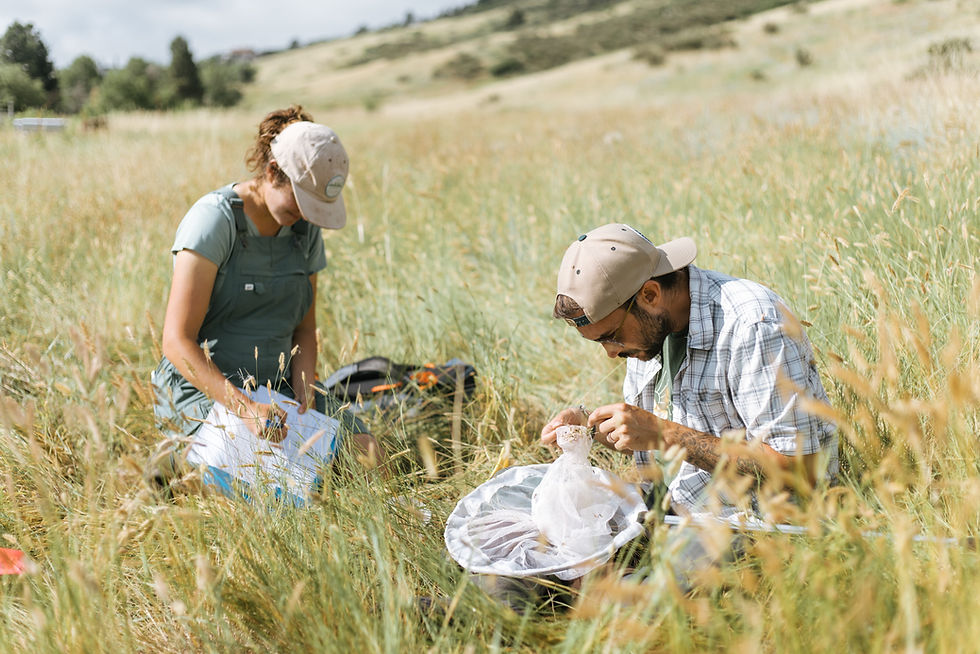
CASCADE is DAR's embedded research program, developed in partnership with Colorado State University. It generates the field data that grounds both the Soil–Water Stewardship Pilot and the Perennial Integration Pilot. At each study site, networks of sensors installed in the soil continuously record moisture levels, temperature, and infiltration rates. This data streams in real time and builds a picture of how the land is responding to specific management over time. Combined with periodic field measurements of vegetation cover, surface condition, and forage productivity, the sensor data allows DAR and CSU researchers to observe how grazing, terracing, and agroforestry interact across different site conditions, and to identify what combinations of practices produce the most meaningful hydrologic improvements.

Why Dryland Research?
Across the Front Range and throughout the American West, soils that once absorbed seasonal precipitation are losing that capacity as drought cycles intensify. The question facing land managers is how to adapt and what combinations of practices actually improve land function under these conditions. CASCADE is DAR's attempt to generate honest, field-based answers in the landscapes where it matters most.

Pilot Objectives
Working across a growing set of sites in Colorado, CASCADE quantifies how rainwater harvesting terraces and silvopastoral systems affect soil moisture, forage productivity, and carbon storage. IoT sensor arrays and a formal CSU research partnership ensure the data is rigorous enough to inform both management decisions and broader policy.

Learning & Accountability
CASCADE produces peer-reviewed findings, not internal reports. Results will be shared as transferable design frameworks for land managers across U.S. drylands. Where interventions underperform, that record matters too — honest field data under real conditions is what makes the findings usable by others.

