
For life on Earth.



Our vision is a livable future.
Looking out from the road, much of the landscape in Boulder County appears green in spring or golden through summer and fall. Step off the asphalt, though, and you'll find soil that barely absorbs rain, sparse vegetation, creek banks that erode a little more each season. This land is continuously losing the capacity to support life.
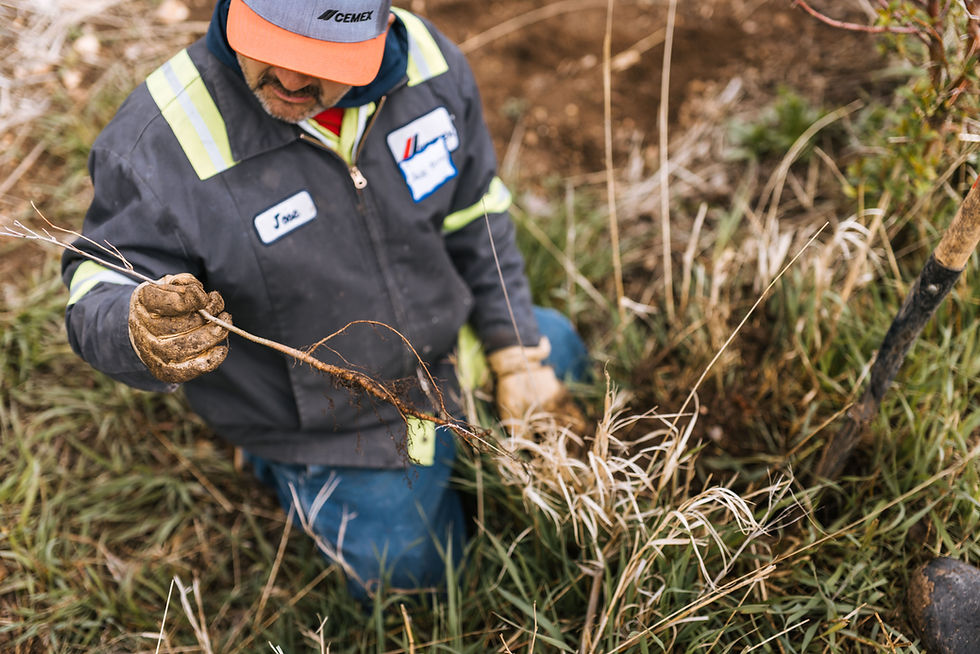
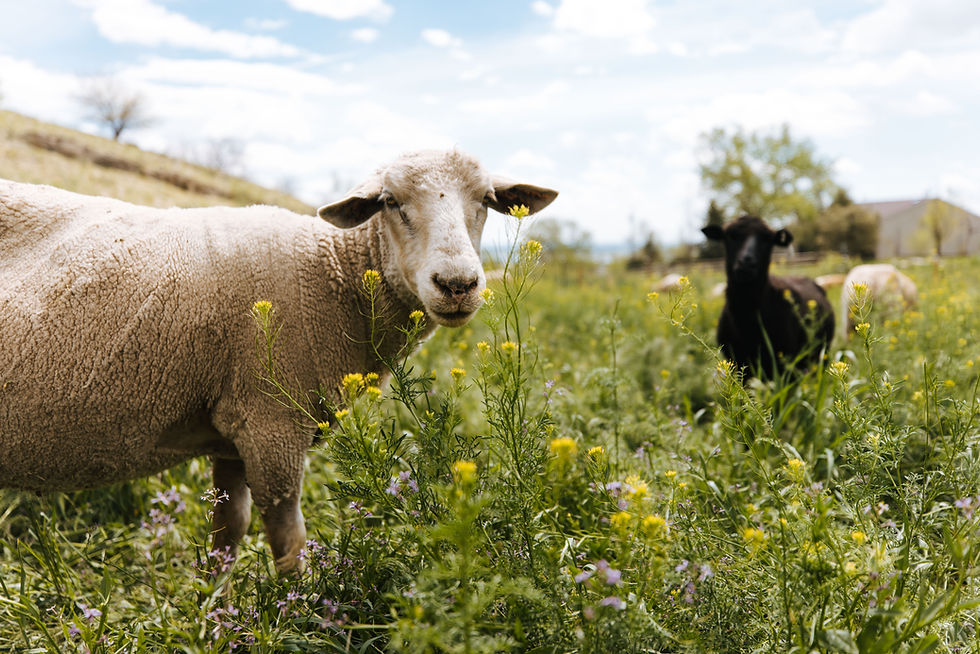
There are well-documented methods for reversing this trend, and they work by aligning land stewardship with natural patterns. Well-managed cattle rebuild soil biology. Well-placed swales slow and spread water so that it can sink. Fruit-bearing and nitrogen-fixing plants hold banks, restore habitat, and provide wind protection and shade. These practices support the land in finding its own balance. It's a slow process, and none of it is guaranteed, but we see land that was degraded ten years ago functioning differently today, and the difference is measurable.
Drylands Agroecology Research (DAR), founded in 2017, is a Boulder County nonprofit. We use grazing, agroforestry, and contour terracing to improve how the land absorbs and holds water. We grow food and medicine in perennial systems that build ecological health and community resilience over time. And we document the success and failure both, because the region needs evidence more than theoretic optimism.
Our purpose is to regenerate landscapes to improve life on Earth. We're here to make real improvements on the land, starting right here at home, and to contribute our findings to stewards everywhere.

Land
We implement innovative land management techniques on public and private properties, treating each site as a research opportunity to better understand how we can bolster the land's regenerative potential.

Community
We invite people onto the land to do real work alongside us. When people tend land together, eat from it, and take responsibility for it, something shifts in how they understand their place in the living world.

Knowledge
Through careful observation and honest measurement, we learn what effective stewardship looks like in dry and changing climates. We share that knowledge openly, contributing to a broader movement working toward ecological and societal health.
We are farmers, designers, and scientists. We are educators, activists, and researchers.
Our Responsibilities
Impact Highlights
Land Stewardship Projects
Over six years, DAR has completed 97 water management and agroforestry projects and now grazes 859 acres across 16 private and public sites.
From Our Research Sites
DAR has continuously monitored 4 sites
(167 acres) for 4 years. These are highlights from that subset of managed land.
This is long-term responsibility
We don't know exactly how long ecological recovery takes at these scales. No one does. What we know is that it requires sustained presence, consistent measurement, and people willing to work the same land year after year without a guaranteed outcome.
That's what we're doing. And we'd like your help doing it.